
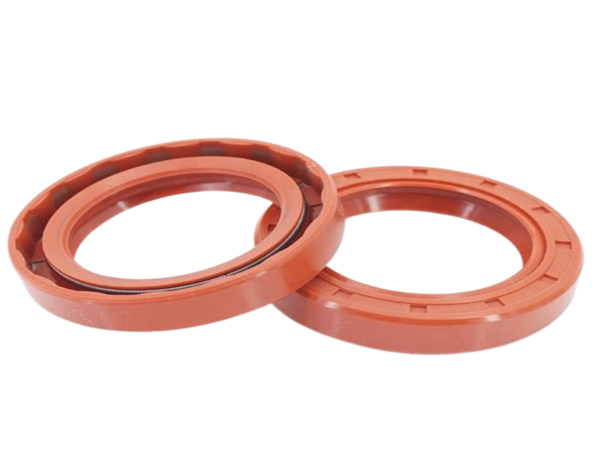
ProHydraulics supplies oil seals (radial shaft seals) to DIN 3760 / ISO 6194-1 and GOST 8752-79, or to your drawing or sample. Standard and non-standard sizes.
An oil seal keeps lubricant inside the unit and keeps dust, dirt and moisture out. We help identify a seal by its marking, sample or dimensions, and select the material for the medium and temperature.
Types of Oil Seals
-
Single-lip seals — one sealing lip with a spring; retain lubricant in gearboxes, pumps and electric motors.
-
Seals with a dust lip — an additional outer lip against dust, dirt and moisture (DIN 3760 types AS, BS, CS; GOST 8752-79 type 2).
-
Rubber-covered outer casing (type A) — good static sealing in the housing and tolerance for surface variations of the bore.
-
Metal outer casing (type B) — requires a precise, clean housing bore.
-
Reinforced metal casing (type C) — higher stiffness and robustness.
-
PTFE lip seals — for aggressive media and dry running.
-
Non-standard seals — sizes and profiles made to drawing or sample.
Technical Parameters
Reference values for radial shaft seals. Exact limits depend on the material, size and operating conditions:
-
media: mineral oils, water, diesel fuel (GOST 8752-79)
-
overpressure up to 0.05 MPa (0.5 bar)
-
circumferential speed up to 20 m/s
-
temperature from −60 to +200 °C, depending on the material
Materials
-
NBR (nitrile rubber): mineral oils, greases, water, diesel fuel; up to +100 °C in mineral oils
-
FKM (fluoroelastomer): high temperatures and aggressive media; up to +200 °C
-
MVQ (silicone): wide temperature range, from −55 to +150 °C
-
EPDM: water and steam; not resistant to mineral oils
-
PU (polyurethane): high wear resistance
-
PTFE: chemical resistance, dry running
Temperature limits depend on the material and the specific grade.
Seal Construction
-
elastomer sealing lip
-
spring pressing the lip against the shaft
-
metal reinforcing insert
-
outer casing (rubber or metal)
-
dust lip (optional)
Shaft and Housing Requirements
Commonly recommended values:
-
housing bore: tolerance H8
-
shaft: tolerance h11
-
shaft surface roughness Ra 0.2–0.8 µm
-
shaft hardness 45 HRC or higher
-
no scratches, burrs or marks in the sealing lip contact zone
Oil Seal Selection Guide
The correct oil seal depends on shaft size, medium, temperature and speed.
Circumferential speed at the sealing lip:
v = π × d × n / 60 000
Where:
v – circumferential speed (m/s)
d – shaft diameter (mm)
n – shaft speed (rpm)
Other important parameters include:
-
shaft diameter, housing bore and seal width
-
working medium
-
temperature
-
pressure
-
dust and moisture (dust lip)
-
standard (DIN or GOST).
Typical Applications
-
gearboxes and reducers
-
pumps
-
electric motors and fans
-
hydraulic units
-
industrial equipment of the steel, cement, mining and marine sectors
-
replacement of worn or discontinued seals by marking, sample or dimensions
Why Choose ProHydraulics
-
seals to DIN, ISO and GOST, and to drawing or sample
-
identification of a seal by marking, sample or dimensions
-
material selection for the medium and temperature
-
one-off or regular supply
Request a Quotation
Send us:
-
a drawing, a sample or the marking of the existing seal
-
shaft diameter, housing bore and seal width (for example 50×72×10 mm)
-
working medium and temperature
-
rotation speed and pressure, if the seal works under pressure
-
preferred material and standard (DIN or GOST)
-
quantity: one-off or regular
Send the request through the form below or to office@prohydraulics.eu.